


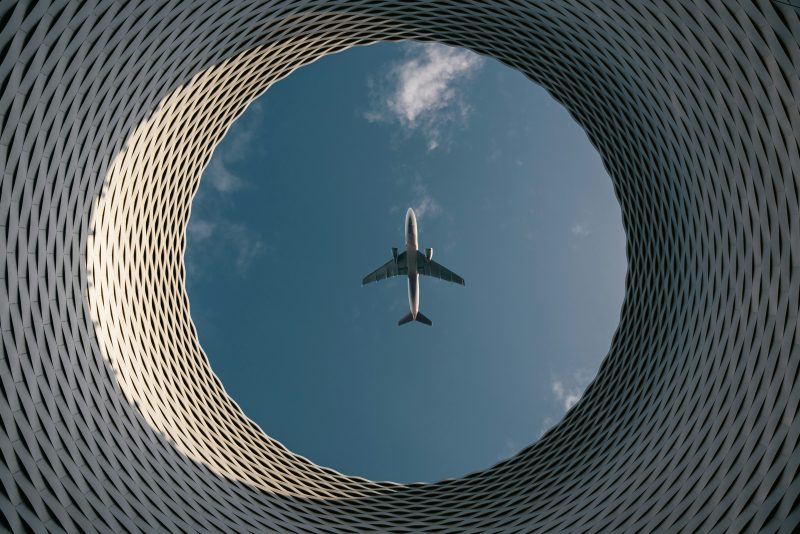
Photo by Maksym Kaharlytskyi on Unsplash
A traveler’s journey doesn’t end at the airport. If the aviation sector and destinations work in isolation on their marketing and development strategies, both can miss out on opportunities to drive demand for flights and deliver tangible benefits to destinations and local businesses. This was one of the most prominent themes that came up at World Travel Market (WTM) London 2026 – at one conference session about how to align aviation growth with destination strategy, we learned that “only 9% of industry professionals see effective collaboration between aviation and tourism, highlighting a misalignment of priorities that hampers strategic growth.”
But conversations at WTM London 2026 also revealed numerous examples of how to navigate the aviation-tourism relationship for mutual benefit. With so many direct flights being launched or increased from China to cities around the world, now is an important moment to sync strategies and collaboratively tackle tourism promotion.
Aviation x Destination
Chinese tourism to Brussels is up by more than 10% year-on-year says Visit Brussels’ International Business Developer, Tom Albrand. New direct flights from Beijing, Chongqing, and Chengdu support this growth, in addition to established routes from Shenzhen and Shanghai. But these flights need to have adequate market demand to stay operational, driving a China marketing strategy led by Brussels Airport and bringing together the tourism boards of Brussels, Wallonia, and Flanders.

Air Canada x Destination Canada’s live streaming session, September 2026
Dragon Trail has also supported several aviation x destination joint marketing campaigns in recent years, such as our RedNote campaign for Tourism Events Queensland and China Southern Airlines, the launch of China Eastern Airlines’ Beijing-Muscat route with the Oman Ministry of Heritage and Tourism in 2025, and a recent live streaming session for Destination Canada and Air Canada to promote new and increased flights from Guangzhou to Vancouver, and Shanghai to Toronto.
Airline x Attraction
Airlines and local attractions can also engage in mutually beneficial promotions. In Dubai, Emaar Entertainment has a long-term partnership with Emirates Airline – passengers are incentivized to book round-trip airfares with Emirates with free tourism vouchers to visit Emaar attractions, such as the Burj Khalifa. Additionally, Emirates passengers can simply present their boarding pass to receive 20% off at these Dubai attractions, says Emaar Entertainment’s Fahd Alshaiba.

XiamenAir’s KOL cabin crew Lin Jia promotes Royal Museums Greenwich in her vlog about the first Xiamen-London direct flight, September 2026
In 2026, Dragon Trail coordinated a collaborative campaign on RedNote to take advantage of the new XiamenAir flight from Xiamen to London Heathrow, to promote our client, Royal Museums Greenwich. After the airline announced its upcoming flight launch, we approached them and made an introduction to Royal Museums Greenwich to see how the two could work together. In September, XiamenAir’s celebrity cabin crew Lin Jia promoted Royal Museums Greenwich to her nearly 850,000 followers, recommending the attraction and giving away complimentary entrance tickets. The post generated over 1 million views and more than 20,000 engagements. “This is a good example of how market awareness and proactive partnership development can turn an emerging opportunity into tangible marketing value,” says Dragon Trail’s Joy Cai, who represents RMG in the China market. “The challenge, and the opportunity, is to identify these connections early and turn them into meaningful collaborations.”
From Hub to Destination
Some countries and airports may function more as travel hubs than destinations in and of themselves, with traveler spending limited to only the airport at best. But airlines can tweak their offers to support extended stop-overs and encourage travelers to actually visit the home destination. A famous example of this is Doha, which offered free city tours to Qatar Airways travelers with long layovers from 2014 until 2020, helping to grow the city’s tourism economy.
Another example is one we learned about at WTM London. Turkish Airlines’ “Stopover in Istanbul” promotion provides a free hotel stay to travelers with a 24-hour to seven-day layover. This is the reason that Indonesia is currently the top international tourism source market for the city of Bursa, Türkiye, says Serkan Teke, Director of Bursa’s Tourism and Promotion Department. (China is the second largest source market.) Bursa is Islam’s fifth holiest city, home to the Bursa Grand Mosque, and an easy day-trip from Istanbul – thus attracting Indonesian pilgrims en route to Mecca.
Dragon Trail works with destinations, attractions, airlines, airports, hotels, retailers, and other travel brands around the world to help them reach Chinese consumers and the travel trade. Our work connecting aviation to greater tourism marketing includes media events, social campaigns, live streaming, and China-ready training for the airport sector. Please contact us to learn more and discuss how we can help you develop a collaborative marketing strategy that turns connectivity into value.
The wonderful partners we work with






Sign up for our free newsletter to keep up to date on our latest news
We do not share your details with any third parties. View our privacy policy.
This website or its third party tools use cookies, which are necessary to its functioning and required to achieve the purposes illustrated in the cookie policy. If you want to know more or withdraw your consent to all or some of the cookies, please refer to the cookie policy. By closing this banner, scrolling this page, clicking a link or continuing to browse otherwise, you agree to the use of cookies.